PTD CAPITAL LLC / TECHNICAL MEMORANDUMPRIMA integration review
PTD-ARC-2026-PRIMA-01 · 16 October 2026 · Version 1.0
Prepared by Mina Harrow · Open
Review boundary
PRIMA studies a modular media surface assembled from PRIMA1 light-emitting units into DNA tiles and, subsequently, a façade matrix. This memorandum consolidates the questions raised by the source drawings. It establishes the evidence required for a bounded prototype review; it does not report an installed fleet or verified commercial performance.
The current project material includes a unit drawing, a tile principle, façade adaptation studies and a Bluesky prototype with different front and reverse readings. These materials support an architectural proposition. They leave the electrical, thermal, serviceability and site-approval boundaries to be demonstrated in a test file.
Interface register
| Boundary | Required record | Review question |
|---|
| Unit to tile | Connector, address, power limit, component identity | Can a failed unit be identified and replaced without changing neighbouring units? |
| Tile to matrix | Assembly revision, mechanical interface, isolation procedure | What is the smallest independently serviceable portion? |
| Matrix to building | Mounting study, power route, weather exposure, access route | Which site conditions require a different assembly or operating limit? |
| Content to controller | Content permission, release version, schedule, fallback | What remains visible when the remote service is unavailable? |
| Controller to operator | Manual stop, fault state, change history, escalation contact | Can the operator distinguish a content fault from a physical fault? |
Evidence before the next phase
A prototype file should contain the exact assembly revision, the component inventory and the conditions of each test. Power and brightness observations need a stated operating mode; a single photograph cannot establish energy use or readability across different environments. A replacement demonstration should identify tools, access, isolation and restoration checks.
The source deck's component count and compatibility percentage remain design inputs pending a supporting measurement method. The review should preserve those source assumptions while keeping them out of realised operating indicators. A revised assumption must retain its previous value, author, date and reason.
Failure and recovery
The next test should distinguish loss of one unit, loss of a tile, loss of communication and loss of power. Each case needs an expected visible state and a recovery owner. A content update should be reversible without physical access. A failed physical component should not require editing the content schedule to hide the fault.
Site-level controls must define a safe shutdown route, local intervention and the circumstances under which operation can resume. These requirements belong to the integration study even while the visual design is evolving.
Open review items
| Item | Next evidence | Status |
|---|
| Serviceable module | Demonstration of isolation and replacement | Proposed test |
| Thermal and electrical limits | Bounded test sheet with instrument and mode | Specification required |
| Façade compatibility | Site classification and exclusions | Under review |
| Brightness and content changes | Operating envelope and fallback sequence | Specification required |
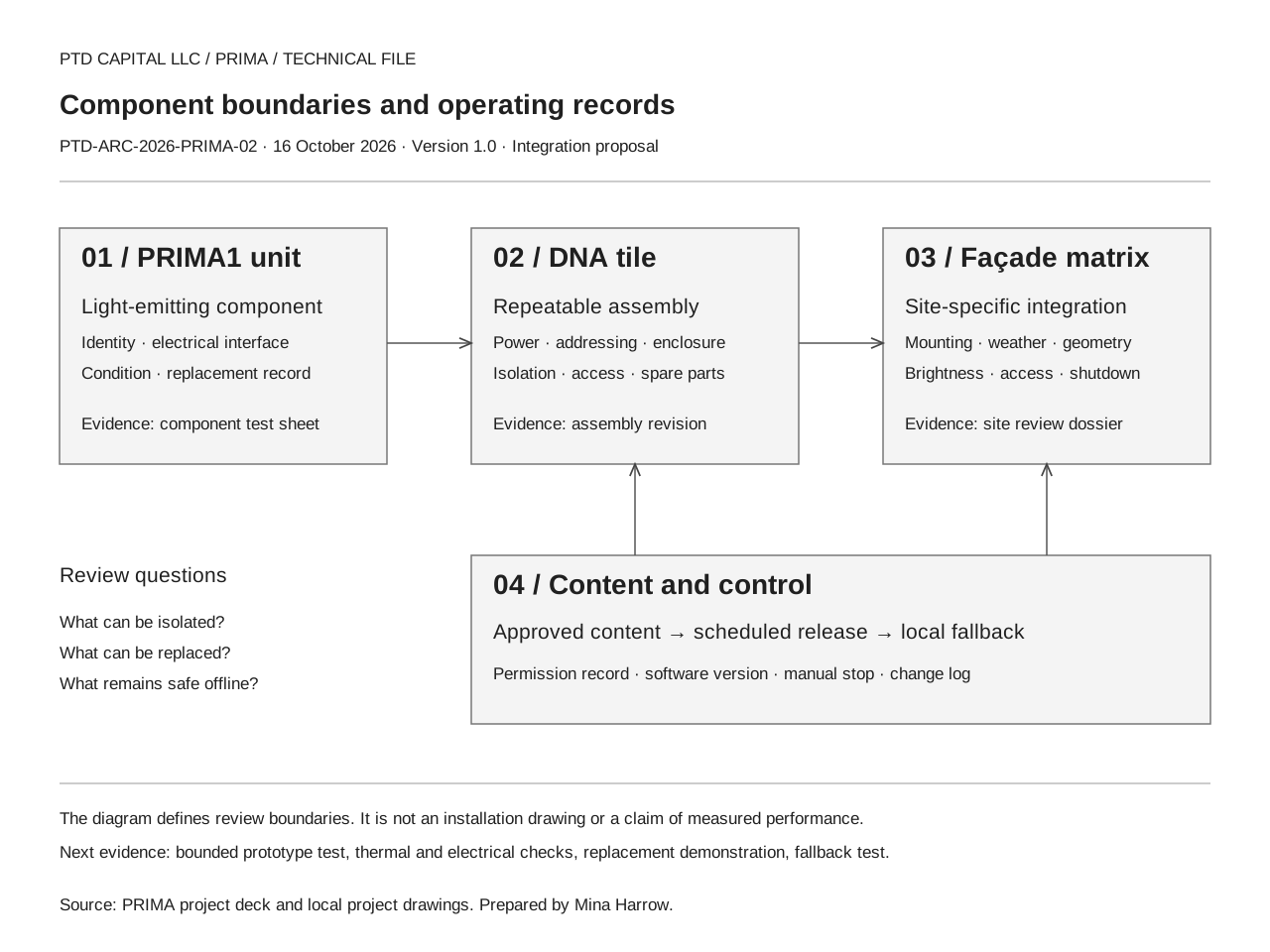 Companion diagram: PTD-ARC-2026-PRIMA-02.